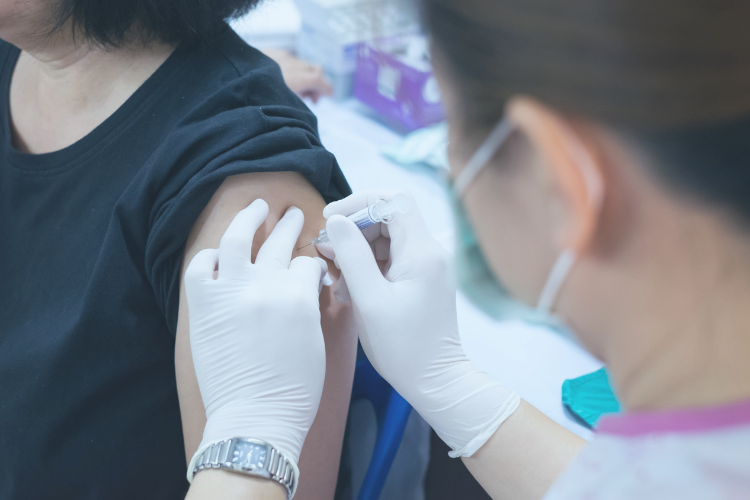
As we start to emerge from lockdown and things begin slowly to return towards normal after the pandemic, many patients are asking about the timing of orthopaedic treatment alongside the Covid-19 vaccine.
Understandably, people who have been waiting for treatment and who may have been experiencing increasing pain are eager to undergo their procedures as soon as possible. But there is also an urgency to receive the vaccine, particularly among patients who are in vulnerable groups.
BOA guidance
The British Orthopaedic Association has compiled some useful guidance to help patients and consultants to decide on the best timing for any orthopaedic treatment. We are following these guidelines at Carrothers Orthopaedics and advising our patients on the recommended course of action for them. If you are due to undergo any kind of treatment, it is important to discuss your individual circumstances with your orthopaedic consultant who can provide more tailored information. If you don’t have a consultant, we would be happy to see and advise you, and provide a diagnosis and treatment plan, if required.
Timing of elective surgery
Elective surgery simply means surgery that is planned in advance, rather than being performed as an emergency in response to trauma or sudden illness.
It is recommended to wait seven days after having the Covid-19 vaccine before undergoing elective surgery. This applies to both doses of the vaccine. The reason for this is to ensure that any symptoms that may result from the vaccine – such as fever – are correctly attributed to vaccination rather than being confused with possible complications post-surgery. A high temperature may be a sign of infection so it’s important that the cause is correctly identified.
Throughout the pandemic, Carrothers Orthopaedics has been asking all patients to self-isolate for up to 10 days prior to surgery and to take a Covid test immediately before their procedure. We are continuing to require this even among people who have been vaccinated to provide additional peace of mind for all of our patients. Despite successful vaccination to minimise Covid-19 related illness and chances of needing hospitalisation, the evidence emerging is that Covid-19 can still be contracted or passed on.
Timing of corticosteroid treatments
You may be offered corticosteroid treatments for pain and inflammation, either as an injection, IV treatment or in tablet form. Steroids are a particularly effective treatment for conditions like osteoarthritis or bursitis and are routinely recommended in inflammatory arthritis to help manage symptoms.
Your orthopaedic consultant will discuss the benefits and risks with you and help you to come to a shared decision. If you are due to be vaccinated for Covid-19 there are some factors to take into consideration:
- It is likely safe to have steroids alongside the Covid vaccine, however your body might not produce such a good immune response to the vaccination as it would do without it.
- We do not recommend delaying vaccination if you are taking steroids or have recently had steroids or will be receiving steroid treatment soon. This applies whether the treatment is in the form of an injection, tablet or IV.
- If you need additional steroids to control inflammatory disease, that may take priority over vaccination, as a flare can also worsen the risks from Covid-19.
- It is important for as many people as possible to receive the Covid-19 vaccination as quickly as possible and to receive maximum benefits from it. For this reason, it may be appropriate to delay a non-essential steroid joint injection, as part of a shared decision agreed with your consultant. The rationale for this is so that the response to the vaccine can be most effective. The BOA guidelines state, for example: “For a patient who is on an elective waiting list for a steroid injection of up to 80mg methylprednisolone or 80mg triamcinolone, the administration of the Covid-19 vaccine is the priority if the vaccine has been offered to the patient and the prevalence of Covid-19 is high. In this scenario, the steroid injection should be deferred by 2 weeks after the vaccine, to enable the patient to mount the best response to the Covid-19 vaccine.”
Talk to an orthopaedic consultant | Cambridge
Please be reassured that types of orthopaedic treatment is now being routinely offered to patients and having the vaccine does not mean that your treatment won’t go ahead. However, in some circumstances it may be advisable to delay it by a couple of weeks to ensure your body responds in the optimum way to the vaccine. If in doubt, please talk to your orthopaedic consultant or contact us for more guidance.
Our consultation fees are clearly presented here.
For your convenience, we offer appointments at both Nuffield Hospital Cambridge and Spire Cambridge Lea Hospital.