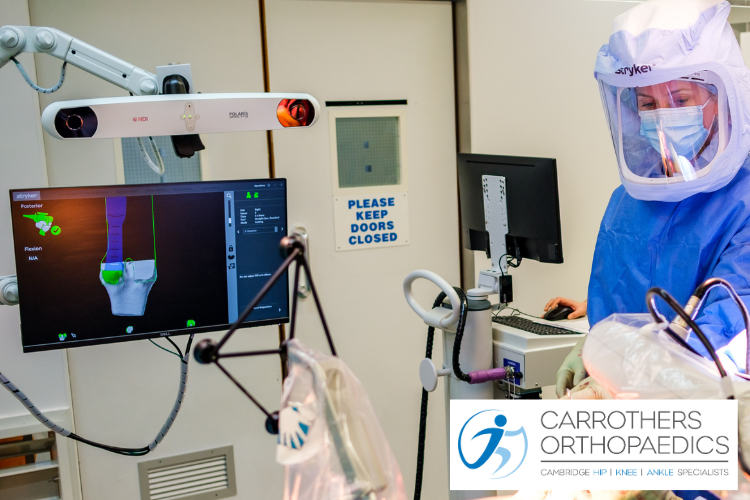
If you are due to have a Mako robotic arm-assisted joint replacement, it can be helpful to get yourself prepared prior to your surgery. This is a summary of what will happen in the weeks and days before your operation, along with some things that you can do to prepare at home.
What will happen prior to surgery
Before you have a joint replacement, you will have several medical appointments to assess your condition and the level of pain you are experiencing. Unless you have sustained a serious injury like a fracture, it is likely that you’ll have discussed a range of less invasive treatments before being offered joint replacement surgery. For example, you may have received injections of corticosteroids or hyaluronic acid, which provide short-term pain relief.
Once you and your orthopaedic consultant have agreed on a joint replacement, you will begin the process of preparing for surgery. If you are an NHS patient, there can be a wait of several months or longer. For private patients, the wait is a few weeks or less. Before the day of your operation you will have a pre-operative assessment organised by the hospital. If medically necessary you will meet with the orthopaedic team and anaesthetist who will assess your health and any risks associated with anaesthesia. You may need a range of preoperative tests, including blood tests, an electrocardiogram (ECG) and X-rays or CT Mako planning scan.
The team will provide full details of how to prepare for surgery, including what to do if you come down with a cold or another illness in the week beforehand, or sustain any cuts, scratches, rashes or infections. They will also talk to you about medications you might be taking, as some can increase your risk of complications on the operating table and will need to be stopped in the weeks before surgery. If in doubt, speak to your orthopaedic consultant who will be able to clarify what to do.
How to prepare
Understand what will happen
It can be helpful to understand exactly what will happen on the day of surgery and afterwards.
Useful Resources on our website:
Knee Replacement Surgery – What to Expect
What to Expect After Hip Replacement
See below for a brief introduction to Mako robotic arm-assisted joint replacements and links to further information.
Prepare your home
You will need to make some simple modifications to your home to reduce your risk of falls after surgery and ensure you can move around safely. We recommend removing rugs and electrical cords and making sure you can move around the space freely using a walker or crutches. Place items that you use regularly within easy reach and create a temporary downstairs living space so you don’t have to go up and down stairs more than necessary. If you live alone, you might want to arrange for a family member or friend to stay with you for the first few days after surgery. Make preparations for caring for pets, such as arranging a dog-walker or someone to call in to feed the pets. You’re not going to want to spend a long time preparing food, so arrange for nutritious meals to be cooked in advance and frozen so you can defrost and reheat them. Alternatively, you might want to buy some healthy ready meals. You may also need to use assistive devices, such as an elevated toilet seat or grabber to help you pick things up. Talk to your orthopaedic team about this.
As you get closer to the day of surgery, pack a bag to take with you to hospital. Your orthopaedic team will advise you what to bring but don’t’ forget things like regular medication, loose-fitting clothes, glasses/contact lenses and your mobile phone and charger.
Prepare yourself mentally and physically
We recommend that patients take a little time to prepare themselves mentally for surgery. This might include making a list of questions or concerns and sharing these with your orthopaedic consultant who will be able to answer your questions and, most likely, put your mind at ease. It’s natural to feel nervous prior to surgery so you might want to focus on what you’re hoping to do once you’re back on your feet again. Take a look online at some relaxation techniques, such as breathing exercises to help you stay calm.
Optimise your chances of making a good recovery
As well as preparing mentally, it’s a good idea to prepare physically for joint replacement surgery. For example, if you smoke it is advisable to quit prior to your operation as smoking can delay healing and increase your risk of infection. Carrying excess weight can also be problematic, particularly if you are having surgery to replace a weight-bearing joint, such as knees or hips. We call this type of physical pre-surgical preparation ‘prehabilitation’ and it can make a difference to surgical outcomes. Talk to your orthopaedic team if you need help to prepare physically for surgery.

What is Mako robotic arm-assisted joint replacement surgery?
Mako robotic arm-assisted joint replacements are helping to improve outcomes for patients having a hip or knee replacement. Using Mako’s innovative SmartRobotics capability, orthopaedic surgeons create a 3D virtual model of the patient’s joint prior to surgery. The enables them to plan the surgery in detail beforehand, identifying the correct size and placement of the prosthetic implant and highlighting which areas of healthy bone and tissue can remain and which parts are damaged or diseased and will need to be removed. During the surgery itself, the Mako robotic arm is used by the surgeon to help them achieve pinpoint precision and stay within the areas identified in the pre-operative plan.
Related Reading
How Mako Robotic Arm-Assisted Surgery Improves Patient Outcomes in Joint Replacement
Planning Your Mako Robotic Arm-Assisted Surgery: What’s Different?
For more information about Mako and for advice on preparing for joint replacement surgery, contact us.
Talk to an orthopaedic consultant | Cambridge
We are always happy to provide information and guidance about the various treatment options, both surgical and non-surgical, including Mako Robotic Arm Assisted Surgery and conventional surgery.
For more information, please contact us.
Our consultation fees are clearly presented here.
For your convenience, we offer appointments at both Nuffield Hospital Cambridge and Spire Cambridge Lea Hospital.