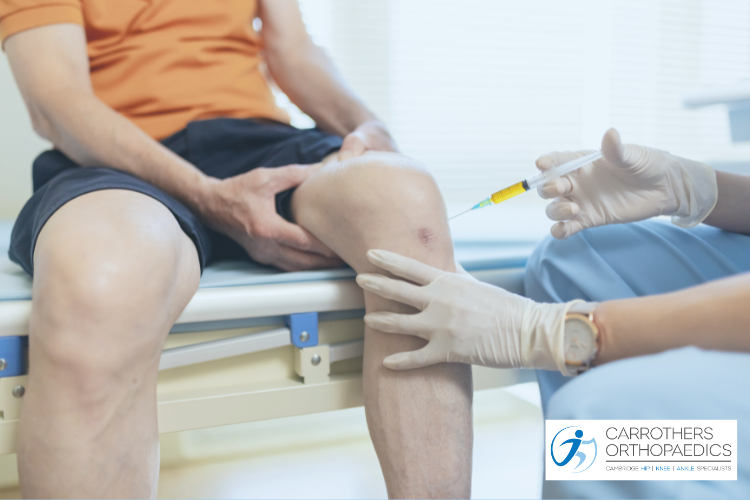
Osteoarthritis is a degenerative disease that can affect any joint in the body. Although there is no cure for the condition, there are treatments that can slow its development and relieve symptoms.
In the latter stages of the disease when the symptoms can become debilitating, many people choose to have joint replacement surgery. This is an effective way to improve mobility, relieve pain and improve quality of life in the long-term.
Why surgery is not always the best option to treat arthritis
Of course, not everyone wants to go the surgical route, and it is not always the most appropriate way to treat osteoarthritis. For example, with mild to moderate arthritis, surgery is not normally recommended as less invasive treatments are normally sufficient to manage symptoms. It is worth bearing in mind that although joint replacement surgery is now routine, nevertheless it is a major surgical procedure and, as with all surgery, it carries a risk of complications. The recovery period can be lengthy and most people don’t want the hassle of a surgical procedure unless they have exhausted all the other options.
Plus, even though prosthetic implants are advancing all the time, all implants will eventually wear out and have to be replaced. We call this type of surgery revision joint replacement and it carries a higher risk of complications than primary joint replacements with poorer outcomes. The longer you can delay having primary joint replacement surgery, the lower your chances of having to have further surgery in the future, hence why orthopaedic surgeons generally advise delaying surgery until your arthritis symptoms have become severe.
Non-operative treatments for arthritis
There is a range of non-operative treatments for arthritis, depending on your symptoms and their severity. As always, we recommend discussing your individual circumstances with your doctor or orthopaedic surgeon before making decisions about your treatment to ensure you receive the most appropriate information and advice.
Painkilling Medication
For mild to moderate arthritis, painkilling medication and anti-inflammatories can be effective, helping you to manage pain and maintain movement and function in the affected joint. They are not suitable for everyone, however, so talk to your doctor before taking painkillers, particularly if you have had a stroke or heart attack, or if you have angina, a gastric ulcer or asthma
Lifestyle change
There are lifestyle changes you can make that help to relieve pressure on arthritic joints. Maintaining a healthy weight and exercising regularly is recommended both for managing symptoms of arthritis and improving overall health and wellbeing.
Physiotherapy
Targeted exercises recommended by a physiotherapist can help with managing pain, maintaining flexibility in damaged joints and building muscle strength. It is important to keep joints supple to slow the progress of arthritis and maintain movement.
Corticosteroid injections
As arthritis becomes more severe, taking over-the-counter medication may no longer provide sufficient relief. An injection of corticosteroids directly into the affected joint can help to reduce pain and inflammation. These injections can be effective from a few months for to up to a year at a time.
Arthrosamid Injections
Arthrosamid is a permanent injectable hydrogel that is used to treat knee osteoarthritis. Arthrosamid injections are part of a new class of injectable therapy, providing relief from pain for up to three years. They use intra-articular polyacrylamide hydrogel and appear to be a highly effective alternative to surgery in appropriate patients.
N-stride APS injections
This is another groundbreaking treatment for osteoarthritis of the knee. N-stride APS injections collect “good proteins” (anti-inflammatory cytokines and anabolic growth factors) from the patient’s own blood using a centrifugal device which separates out the individual components of the blood. These good proteins are injected into the damaged joint. N-stride injections have been shown to relieve pain, reduce stiffness and inflammation, restore mobility and possibly improve overall cartilage health.
Viscosupplementation
This is another form of therapeutic injection. It involves injecting hyaluronic acid – which occurs naturally in the synovial fluid within the joints, acting as a lubricant and shock absorber – directly into the affected joint. Over a period of weeks, the patient receives up to three separate injections which may be combined with injections of platelet-rich plasma to reduce inflammation and improve function.
Carrothers Orthopaedics offers a range of diagnostic tests for osteoarthritis as well as surgical and non-surgical treatment plans. We are happy to recommend a personalised treatment plan for you depending on the type and severity of arthritis you have and your individual lifestyle and priorities. Contact us for more information.
Talk to an orthopaedic consultant | Cambridge
We are always happy to provide information and guidance about the various treatment options, both surgical and non-surgical, including Mako robotic arm assisted surgery and conventional surgery.
For more information, please contact us.
Our consultation fees are clearly presented here.
For your convenience, we offer appointments at both Nuffield Hospital Cambridge and Spire Cambridge Lea Hospital.