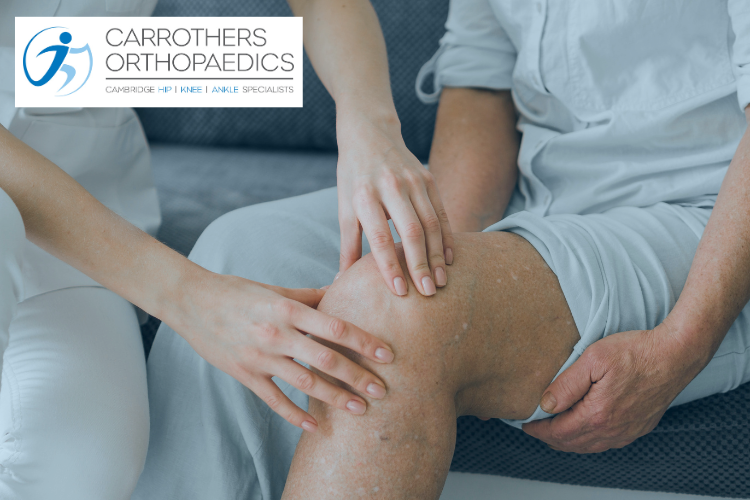
Osteoarthritis affects more than 520 million people around the world, making it the most common joint condition globally. There are some common and persistent myths about the disease which can make it hard for people affected by osteoarthritis to understand the condition, its causes and the most effective ways to treat it. In this blog we will address the top 5 myths we hear most often in our clinics…
Osteoarthritis just affects old people – Myth
While the chances of developing osteoarthritis increase with age, it doesn’t only affect older people. Osteoarthritis occurs because the cartilage that cushions and protects the ends of your bones starts to deteriorate over time. While ageing can be a factor, so too is carrying excess weight, overusing your joints or a previous joint injury. Younger adults can be particularly prone to osteoarthritis if they have an abnormal joint structure of if they injure their joint. Below the age of 45, osteoarthritis is more common in men while over that age more women than men are affected.
Osteoarthritis is an inevitable part of ageing – Myth
Osteoarthritis is not an inevitable part of ageing. While it’s true that the risks of developing the disease increase as you get older, there are positive steps you can take to reduce your risk including maintaining a healthy weight to avoid overloading weight-bearing joints. Regular, low-impact exercise helps keep your joints supple and well-lubricated (see below). If you injure yourself playing sport, seek medical help and allow yourself to recover fully before returning to exercising. Quit smoking or vaping. Cigarette smoke contains chemicals which can increase inflammation in the body, leading to worsening joint pain and swelling and a potential acceleration in the degeneration of joint cartilage[1]. There are also concerns about vaping, which may trigger inflammation in the lungs and carry possible long-term side effects. Help is available to quit smoking and vaping via the NHS.
Osteoarthritis is simply the result of ‘wear and tear’ on joints – Myth
Osteoarthritis was historically known as ‘wear and tear arthritis’. However, it isn’t as simple as that. A number of different factors affect how our joints wear. Inflammation within the body can interfere with the way the cartilage in the joints is maintained and nourished. As mentioned above, being overweight adds to the strain on weight-bearing joints but it also increases the level of inflammation in your system which contributes to joint changes. Losing just 6% of total body weight can reduce pain and improve function, while losing 25% of your body weight can improve outcomes by as much as a half [2].
I should rest and not exercise if my joints are painful – Myth
Exercise is one of the core treatments for osteoarthritis and there are very good reasons for this. Exercise helps to relieve pain, reduce symptoms and keep you active and independent for longer. Targeted exercise can increase muscle strength, so your joints are well-supported and stay stronger. It lubricates the joints helping to reduce stiffness and improve flexibility. It improves your balance and can support you to maintain a healthy weight. Aside from this, exercising boosts your mood and can help relieve feelings of tiredness and low energy. It is important to find a form of exercise that you enjoy so you are able to maintain it and, ideally, to combine stretching, strengthening and cardiovascular activity.
There is nothing you can do about osteoarthritis – Myth
While it is correct that there is no cure for osteoarthritis, which is a degenerative disease that tends to worsen over time, this doesn’t mean there’s nothing you can do to slow the progression of the disease or to manage the symptoms. There are many different treatments for osteoarthritis, depending on the severity of your symptoms.
In the early stages, most people can manage their symptoms with a mixture of lifestyle changes (weight-loss, exercise, healthy diet), painkillers and physiotherapy.
If symptoms worsen you may wish to explore injections of corticosteroids or hyaluronic acid and knee intra-articular polyacrylamide hydrogel (Arthrosamid) to relieve pain.
Injections of anti-inflammatory cytokines and anabolic growth factors (the N-stride APS injection) taken from the patient’s own blood can provide relief from pain and stiffness for up to 12 months.
For more advanced osteoarthritis, joint replacement surgery is a highly effective treatment.
There is now a wide range of different surgical options, including Mako robotic-arm assisted joint replacement, minimally invasive total hip replacements and customised knee replacements.
For more information about diagnosing, managing and treating osteoarthritis, contact us.
Talk to an orthopaedic consultant | Cambridge
We are always happy to provide information and guidance about the various treatment options, both surgical and non-surgical, including Mako Robotic Arm Assisted Surgery and conventional surgery.
For more information, please contact us.
Our consultation fees are clearly presented here.
For your convenience, we offer appointments at both Nuffield Hospital Cambridge and Spire Cambridge Lea Hospital.
Sources
[1] https://www.arthritisireland.ie/blog/the-truth-about-smoking-what-people-with-arthritis-need-to-know/
[2] https://www.nuffieldhealth.com/article/5-myths-about-osteoarthritis