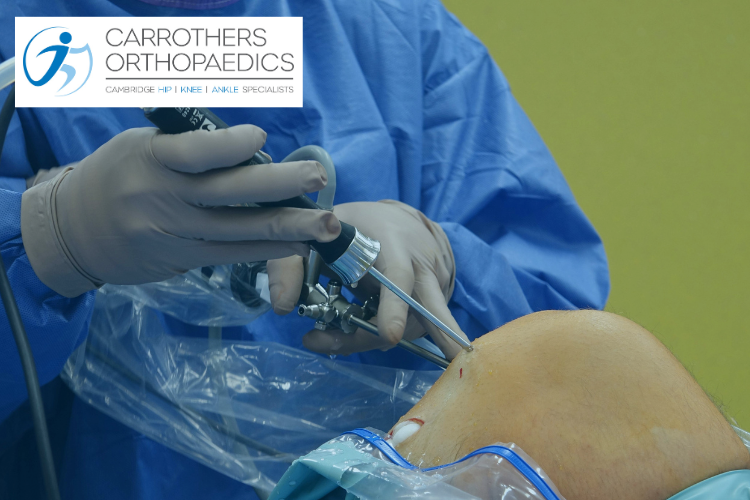
Technological innovation is having a huge impact on every aspect of our lives, and nowhere more so than in the field of orthopaedics.
Orthopaedic consultants deal with the diagnosis, treatment and prevention of conditions that affect the musculoskeletal system (bones, joints, muscles, tendons, ligaments and nerves). In recent years, there have been significant advances in the treatment of pain and injury.
The pace of change is continuing to accelerate, which is good news for patients as it promises further improvements in the months and years to come.
Innovations Transforming Orthopaedics
The areas highlighted by the 2023 BMJ Innovations roundtable [1] as having the greatest potential impact in orthopaedics over the next decade are listed below.
Many of these are already helping to transform the experience of patients here in the UK and further advances will only enhance this.
Robotics
Orthopaedic robots are designed to enhance precision in navigation and positioning, particularly in joint replacement surgery complemented by recent advances in 3D imaging technology. Haptic Guidance is used to guide surgeons based on preoperative plans, while Active Constraints Control enforce safe zones during surgery. Andrew Carrothers is one of the UK orthopaedic surgeons leading on the adoption of Mako Robotic Arm-Assisted Joint Replacements which provide improved precision, performance and recovery times.
He has now performed more than 1000 Mako procedures and repeatedly receives positive feedback on the independent review site iwantgreatcare.org.
This review extract, left on 17 July 2026 by a private patient who underwent a partial knee replacement at Nuffield Hospital Cambridge is typical of Andrew Carrothers’ patient feedback:
“To say I am thrilled does not describe how amazed and pleased I feel. The results have been nothing short of miraculous for me. I am looking forward to reclaiming the simple things my damaged knee took away—like a daily walk at Grafham Water with my dog. But more than that, I can now confidently reschedule a trip I postponed this year to walk the Great Wall of China next year, knowing it is now totally achievable.”
Orthobiologics
This is where therapies developed from biologic (natural) substances are used by orthopaedic consultants to relieve pain and other symptoms arising from conditions like osteoarthritis. In some cases, orthobiologics may help delay the need for surgery.
Orthobiologics are also used to enhance the body’s ability to heal from an injury caused by overuse, or to improve healing after orthopaedic surgery.
Like robotics, this approach to treatment – called orthopaedic regenerative medicine – is already being offered by leading orthopaedic consultants like Andrew Carrothers.
Nstride APS injections, which use anti-inflammatory cytokines and anabolic growth factors extracted from the patient’s own blood, to treat joint pain. A single injection can provide relief from pain and stiffness, as well as improving cartilage health and restoring mobility for up to 12 months.
3D printing
Initially developed in the late 1990s, 3D printing is enabling precise, patient-specific designs of metal implants for use in joint replacements and resections. These are helpful for patients with complex anatomical variations and large bone defects, as well as in stabilising implants.
Artificial Intelligence
Already AI is being used for surgical planning and delivery, as well as patient phenotyping (finding and grouping observable traits, medical signs and health conditions in patients to ensure the right treatment is matched to the right person). Generative imaging is being used to turn 2D X-rays into 3D reconstructions, enhancing surgical precision.
What the Future Holds
Each of these areas of innovation brings both opportunities and challenges and there is a need for further research and implementation based on a solid evidence-base.
Alongside these core development areas, orthopaedics has seen further technological advances, including the use of smart implant technology, which are orthopaedic implants that use sensors and microelectronics to monitor real-time physical and biological data post-surgery [2].
While these are not yet part of daily clinical practice, due to challenges that still need to be overcome, the day is not too far away when smart implant technology will become part of the orthopaedic consultant’s resources, helping to further improve patient outcomes.
For more information about leading edge treatments for joint pain and injury, including Mako Robotic Arm-Assisted Joint Replacements, contact us.
Talk to an orthopaedic consultant | Cambridge
We are always happy to provide information and guidance about the various treatment options, both surgical and non-surgical, including Mako Robotic Arm Assisted Surgery and conventional surgery.
For more information, please contact us.
Our consultation fees are clearly presented here.
For your convenience, we offer appointments at both Nuffield Hospital Cambridge and Spire Cambridge Lea Hospital.
Sources