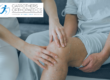
Arthritis of the knee is a painful condition that causes stiffness, swelling and loss of function. Think about how often we use our knees in everyday life – for sitting down or getting up out of a chair, going upstairs, getting in and out of cars. The knee is one of the most hard-working joints in the body so knee pain can be debilitating, and as it becomes more severe, it can limit our ability to do simple day-to-day tasks.
So, what is arthritis? The word is actually an umbrella term that covers more than 100 different diseases and conditions. By far the most common is osteoarthritis. A common misconception is that arthritis only affects older people. While osteoarthritis tends to occur more frequently as we age, it can affect people of any age. It occurs globally in both men and women.
How many people are affected by arthritis?
According to the leading UK charity Versus Arthritis more than 20 million people in the UK (of a population of around 67,508,000) are living with a musculoskeletal condition. Ten million of them have osteoarthritis, of whom more than half (5.4 million) have knee osteoarthritis.
Knee osteoarthritis is one of the top 10 causes of disability worldwide, according to The Epidemiology and Impact of Pain in Osteoarthritis by Tuhina Neogi, published in the journal Osteoarthritis Cartilage. It points out that musculoskeletal conditions rank second in recent estimates of global years lived in disability and knee osteoarthritis is among the top three conditions cited. Worldwide figures for the years of life lived with disability place knee osteoarthritis within the top 10 noncommunicable diseases for globally disability-adjusted life years.
What causes knee osteoarthritis?
Osteoarthritis is a degenerative disease, causing bone strength to deteriorate, connective tissues to weaken and inflammation to damage the joint lining. When you have osteoarthritis of the knee, the loss of cartilage in the joint causes the bones to rub together, resulting in stiffness and swelling. You may be particularly at risk of damaging your knee joint if:
- you are overweight with a body mass index of 30 or more
- you injure your knee
- your knee is subjected to regular stress, for example by participating in certain sports or occupation
- you have an abnormality of the knee joint.
What are the symptoms?
The primary symptom is pain and loss of normal knee function, which worsens as the condition develops. Your knee may feel stiff and/or swollen and it may be particularly painful after a period of inactivity. You might experience a cracking or grinding sensation as you move, or your knee might lock up or feel like it is about to give way.
How is it diagnosed?
Your doctor will carry out a physical examination to assess the range of motion in your knee joint, how you walk and whether there is instability or swelling. You may be given an X-ray, MRI scan or blood test to assess the condition of the joint and rule out other possible causes.
Your knee is made up of three separate compartments – the medial (on the inside of the knee), lateral (on the outside of the knee) and the patellofemoral compartment (in the front of the knee). In some people with knee osteoarthritis, only one of the compartments is affected, normally the medial compartment. If your tests show this is the case, you may be offered a partial knee replacement. As the name suggests, this involves replacing only one component of the knee with an artificial implant while the remainder of the joint, which is unaffected by osteoarthritis, remains intact. The anterior and posterior ligaments are also preserved. There are benefits and risks to having a partial rather than a total knee replacement.
What other types of arthritis can affect the knees?
While osteoarthritis is the most common form of arthritis, there are others that can cause knee pain and stiffness. These include rheumatoid arthritis, which is an autoimmune condition (where the body’s own immune system mistakenly attacks healthy tissue) and psoriatic arthritis, which is another type of autoimmune arthritis that occurs alongside the skin condition psoriasis. Other common causes of knee pain include stress injuries such as tendonitis, sprains, strains and cartilage tears.
What is Mako Partial Knee Replacement?
A Mako Partial Knee Replacement is the next generation in unicompartmental/partial knee replacement surgery. It uses ground-breaking robotics to support the orthopaedic surgeon on the operating table and innovative computer software to enable them to plan the procedure in detail prior to surgery.

How is it used to treat knee arthritis?
Before surgery, patients have a CT scan of the damaged joint. Usually combined with an MRI scan it will confirm which compartments of the knee are healthy and which are affected by osteoarthritis. A 3D virtual model of the patient’s unique anatomy is loaded into the Mako system software, which then, with the surgeon creates a fully personalised pre-operative plan. During the surgical procedure itself, the orthopaedic surgeon guides the Mako robotic arm, using it to prepare the joint to receive the prosthetic implant. Mako’s unique Accustop technology supports them to remain within the pre-defined area of the joint, so only damaged or diseased tissue is removed and healthy tissue is retained. This enables the implant to be positioned in precisely the right place and because as much of the patient’s natural joint as possible is retained, if a revision joint replacement is needed at a future date to replace a worn-out prosthesis, there is likely a lower risk of complications.
The Mako system has been shown to improve outcomes for patients in several important ways:
- In laboratory studies, it enables surgeons to implement their surgical plans with greater accuracy which improves performance of the implant.
- Mako protects soft tissues and ligaments from damage, according to clinical studies.
- Patients who undergo Mako surgery report lower pain scores than those who have conventional surgery, when surveyed after six months.
- In clinical studies, Mako patients surveyed six months after surgery report better patient satisfaction scores compared to those who have conventional joint replacement surgery.
“I had a Mako Robotic partial knee replacement from Andrew Carrothers. A full and detailed explanation of the procedure was provided, and all of my queries were answered clearly and with empathy. I had full confidence before and after the surgery. Recovery was relatively straightforward when balanced with adequate rest and physiotherapy. I would happily recommend Andrew Carrothers to anyone considering a PKR procedure.”
Written by a private patient at Nuffield Hospital Cambridge5th July 2024
Carrothers Orthopaedics has been at the forefront of Mako joint replacement surgery over the past six years. To date, Andrew Carrothers has completed 60 Mako Partial Knee Replacements. For more information, contact us.
Related Reading
Treating Arthritis with a Mako Total Knee Replacement
Treating Arthritis with a Mako Total Hip Replacement
Talk to an orthopaedic consultant | Cambridge
We are always happy to provide information and guidance about the various treatment options, both surgical and non-surgical, including Mako robotic arm assisted surgery and conventional surgery.
For more information, please contact us.
Our consultation fees are clearly presented here.
For your convenience, we offer appointments at both Nuffield Hospital Cambridge and Spire Cambridge Lea Hospital.